Altitude Sickness in Durango Colorado
What to Know Before Visiting Durango
By Physicians at Fresh Air Clear Mind Vacations
Prescribed by the Docs
How Does Altitude Affect the Body?
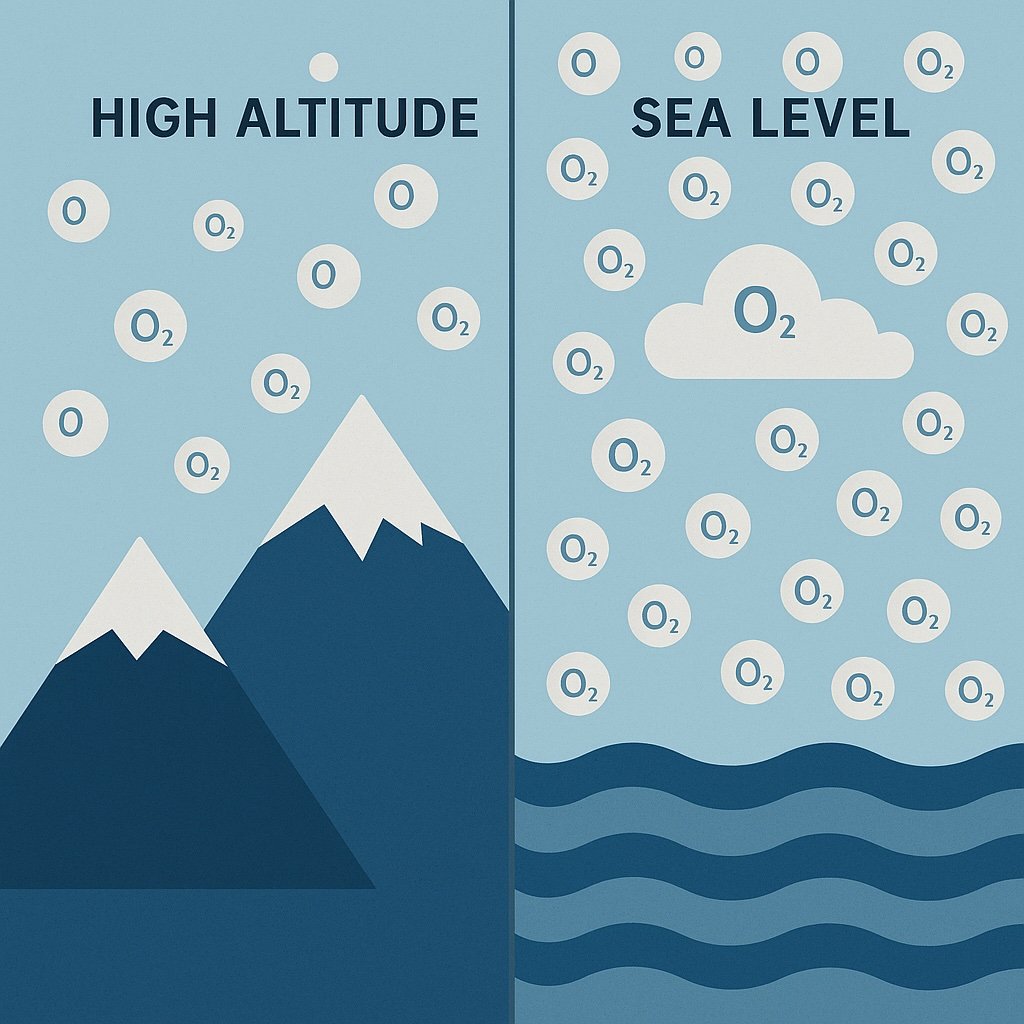
As elevation increases, the amount of oxygen available in the air decreases. When people travel from sea level to higher altitude, the body may have difficulty adjusting to this lower oxygen concentration—especially if the ascent is rapid.
To compensate for lower oxygen levels:
- You breathe faster and deeper to increase oxygen delivery
- Your heart rate increases
- Over time, your body makes physiologic adaptations to improve oxygen use
If the body does not adapt well, reduced oxygen can lead to changes in blood flow and pressure that affect the brain and lungs, resulting in altitude-related illness.
Types of Altitude Illness
There are three recognized forms of altitude sickness:
Acute Mountain Sickness (AMS)
- The most common and mildest form
- Symptoms are uncomfortable but usually not dangerous
High-Altitude Pulmonary Edema (HAPE)
- Fluid accumulates in the lungs
- Causes shortness of breath and low oxygen levels
- A medical emergency
High-Altitude Cerebral Edema (HACE)
- Swelling of the brain
- Causes severe neurologic symptoms
- A medical emergency
Stay tuned for our next post explaining why Durango is ideal to avoid altitude sickness
When Does Altitude Sickness Occur?
Several factors influence risk:
1. Elevation
- Altitude sickness is uncommon below ~8,000 feet
- Risk rises significantly above 10,000–11,000 feet, especially with rapid ascent
2. Speed of Ascent
- Flying directly to altitude carries more risk than gradual ascent by car or foot
- Above 8,000 feet, it’s best to avoid ascending more than 1,500–1,650 feet per day
3. Other Risk Factors
- Alcohol or sedative use
- Prior history of altitude sickness
- Underlying heart or lung disease
Symptoms of Altitude Sickness
The most common symptom is:
- Headache
Other possible symptoms include:
- Nausea or vomiting
- Loss of appetite
- Fatigue or weakness
- Poor sleep
- Dizziness
- Shortness of breath with exertion
- Visual changes
Severe or worsening symptoms require medical attention.
How Is Altitude Sickness Evaluated?
If symptoms are severe, hospital evaluation may include:
- Chest X-ray
- EKG
- CT or MRI (in neurologic cases)
These tests help rule out other serious conditions and identify complications such as pulmonary or cerebral edema.
Treatment of Altitude Sickness
First Priority: Descend
- Descending at least 1,000 feet often leads to rapid improvement
- Descent is essential for severe symptoms
Additional Treatments (for Mild to Moderate Symptoms)
- Rest and reduced activity
- Supplemental oxygen
- Medications such as:
- Acetazolamide (helps acclimatization)
- Dexamethasone (neurologic symptoms)
- Nifedipine (select cases of pulmonary involvement)
- Portable hyperbaric oxygen therapy (used in some settings)
How Can Altitude Sickness Be Prevented?
- Ascend gradually
- Take rest days to allow acclimatization
- Stay well hydrated
- Limit alcohol and sedatives
- When possible, sleep at a lower altitude than where you spend the day
- Preventive medications (e.g., acetazolamide) may be appropriate for high-risk travelers—discuss with your physician
What This Means for Your Stay in Durango
Good news: Durango sits at approximately 6,500 feet, which is below the altitude where most people develop altitude sickness.
While mild symptoms can occasionally occur during the first 24–48 hours, serious altitude illness is uncommon at this elevation.
Stay tuned for our next post, where we’ll explain why Durango is the perfect place to stay when visiting Southwest Colorado—especially when altitude is part of the equation.